
Challenge
For many large global retailers, water is shifting from a utility line item to a material business risk, and our client was no exception. Water bills were climbing substantially, particularly in water stressed regions, where the company had clustered some of its largest operational footprints.
At the same time, leadership was beginning to recognize that water posed a more existential threat to long-term growth. Could their stores still operate in their current basins in 30-50 years, and could the business continue to expand into water-scarce areas without jeopardizing operational continuity?
Leadership also recognized the work needed to begin inside its own operations before it could credibly extend into supply chain or watershed-level engagement. The first step was to identify the highest-risk and highest-usage sites, set meaningful reduction targets, and build the financial proof points needed to fund future investment in water resilience technologies.
Despite the urgency, the company faced several structural barriers to addressing water risk:
While the company’s central operating dashboards captured water use across its facilities, department-level breakdowns and monitoring were inconsistent. For example, every site had a master municipal meter, but only a small fraction of facilities (roughly 1 in 10) had submeters on critical systems like irrigation and refrigeration.
A previous metering vendor had gone out of business, forcing a company-wide rollout of new hardware mid-program. Teams had to install and learn an entirely new data system.
Reflecting the long-standing, systemic undervaluing of freshwater resources, municipal water was priced artificially low across nearly all facilities. That made internal buy-in difficult to secure from corporate leadership, even as facility workers and operational managers were pushing for action from the ground up.
While the company’s central operating dashboards captured water use across its facilities, department-level breakdowns and monitoring were inconsistent. For example, every site had a master municipal meter, but only a small fraction of facilities (roughly 1 in 10) had submeters on critical systems like irrigation and refrigeration.
A previous metering vendor had gone out of business, forcing a company-wide rollout of new hardware mid-program. Teams had to install and learn an entirely new data system.
Reflecting the long-standing, systemic undervaluing of freshwater resources, municipal water was priced artificially low across nearly all facilities. That made internal buy-in difficult to secure from corporate leadership, even as facility workers and operational managers were pushing for action from the ground up.
The retailer engaged Earth Finance to organize the underlying data, score water risk and intensity across its portfolio, and develop location-specific water targets that operators could act on.
Our approach
Combining physical risk and sales-driven water intensity modeling, our team partnered with the retailer to formalize water reduction targets across hundreds of sites on 4 continents. Here’s how it worked:
1) Data consolidation and stakeholder engagement. First, we gathered and organized sales data, operational water data (gallons consumed per day, cost per gallon), and location data from sustainability and merchandising teams. These data were paired with stakeholder interviews across warehouse managers, frontline operators, and regional sustainability leads. The goal was to understand which aspects of facility water use operators could actually control, such as defrosting practices, cooling tower spray-down routines, and irrigation cycles.
2) Risk scoring and intensity modeling. We then ran every location through the WWF Water Risk Filter to establish a basin-level physical risk score (1–5) covering groundwater availability, flooding risk, long-term drought, aridification, and surface water pollution. In parallel, we built an intensity metric (gallons of water per $1,000 of sales) and sorted the facilities into quartiles. For example, the analysis revealed that over 100 sites landed in the “very high risk” tier, with both high-risk water scores from WWF and high intensities in terms of water usage – averaging roughly 8,000 gallons per facility.
These outputs were used to build place-based reduction targets that concentrated effort and capital where the business was most exposed. If a site sat in the highest-risk, highest-intensity quartile, the target defined the daily and annualized usage cut required to move it down one quartile over the next 5 years.
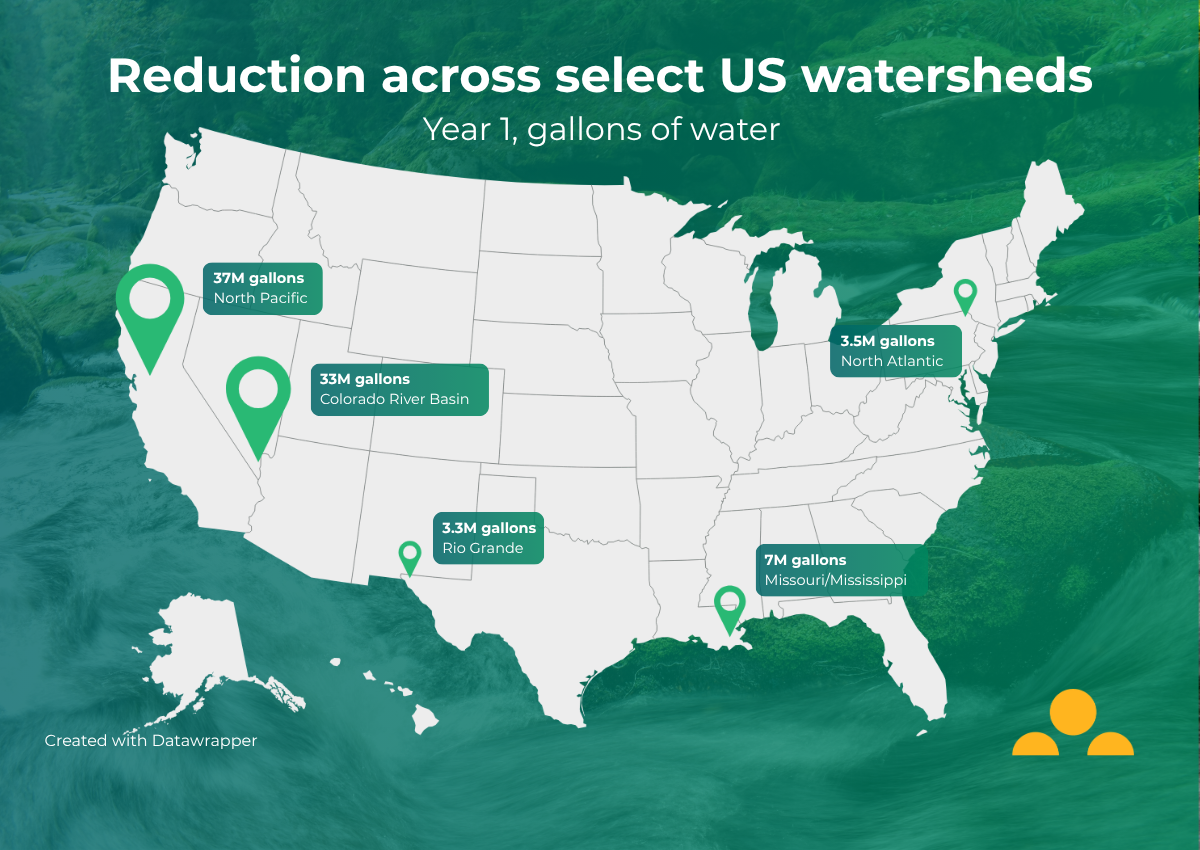
Sample of high-risk watersheds from WWF Water Risk Filter and/or watersheds with sizable operational clusters. Notably, some of the most “risky” locations had the biggest decline in water use after the targets were implemented.

3) Integration with business intelligence systems. The company already had a robust facility-level dashboard tracking metrics such as energy use, sales by department, labor spend, foot traffic, and water use. Getting the new water metrics and targets into that dashboard was critical to the program’s success.
To accomplish this, we worked closely with the business intelligence team to align our data (risk group, quartile, annual usage, and percentage and daily usage reduction targets) to the dashboard’s backend column titles, data types, and language.
4) Communications and target rollout. Finally, we worked with the water team to develop materials for directors and VPs that connected each facility’s target to portfolio-level risk exposure and utility spend. We also drafted operator-facing guidance to help workers translate each target into specific behavioral changes on the ground. This included a synthesis of highest-leverage practices identified in the stakeholder interviews paired with the rationale for why each target was achievable.
Project outcomes
The pilot delivered measurable water and cost reductions across the portfolio in year one, while establishing the data infrastructure, internal alignment, and business case the company needed to fund the next phase of investment. Crucially, it shifted the narrative from water being viewed as a compliance exercise and cost center to a ROI-driver.
Following this project, the team is equipped to:
- Build internal buy-in for capital investment in water efficiency.
- Expand the target program to all global locations, including logistics and distribution facilities.
- Evaluate a structured portfolio of pilot technologies for prioritized rollout in the highest-risk basins.
- Establish the internal credibility to engage suppliers and watershed partners in future years.
Key wins
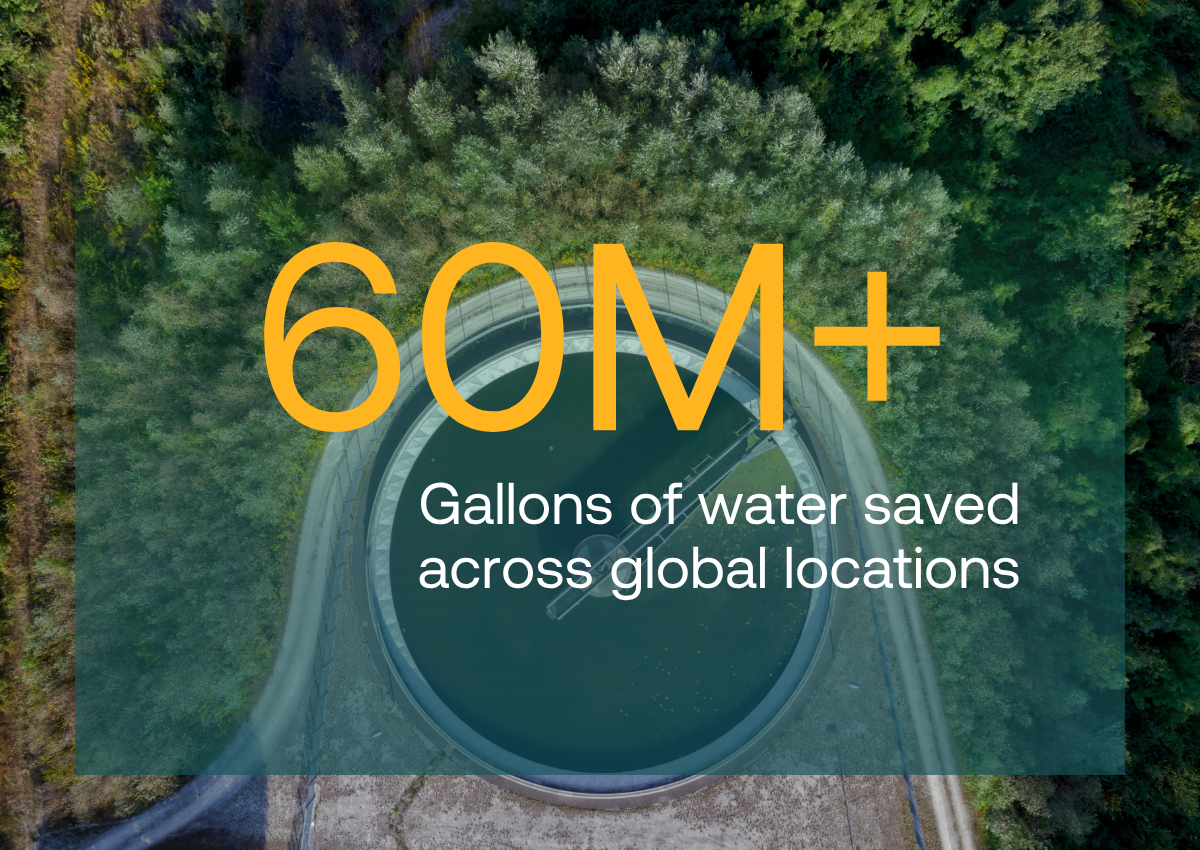
60M+ gallons
Water savings across global locations in Y1
$750K
Water utility spend avoided in Y1
Hundreds of sites
Global locations under new water intensity targets
5 pilots
Water-saving technology pilots identified for scale
For the retailer, the program’s value extends well beyond year-one savings. By proving that risk-informed water targets can simultaneously reduce consumption and boost margins, the team has secured the internal buy-in needed to expand the program, which is anticipated to save 75M+ gallons in its second year of implementation.
The team is now also considering investment in technologies such as grey water irrigation, advanced cooling tower retrofits, native landscaping, onsite storage tanks and water treatment, and rainwater harvesting. More importantly, they’ve built the operational foundation for a water stewardship strategy that eventually reaches supply chain and watershed health.
Interested in setting place-based water targets? Earth Finance helps companies understand the true value of water and develop strategies that protect businesses, communities, and watersheds in a changing world.
Get in touch