Challenge
This Fortune 500 beauty company, like others in the industry, is heavily reliant on ingredients found in nature. From kelp and vanilla to patchouli and vetiver, many of the company’s core raw materials are grown in ecologically unique regions.
While the company’s sustainability strategy was historically heavily weighted toward emissions, leadership increasingly recognized that other impacts such as extreme weather, water stress, biodiversity loss, and commodity disruption could materially impact their top and bottom line and long-term continuity.
What they lacked was clarity on how those impacts might take shape. How could planetary change impact a growing region's suitability? What manufacturing facilities are most at risk of drought or severe weather? And what does that mean for price and margins?
The company faced several constraints to answering these kinds of questions:
Extreme weather, water stress, biodiversity impacts, and energy risks do not operate independently. Understanding their interaction and translating them into financial language requires specialized tools and expertise.
The company had some internal data, such as site-level energy use, water consumption, and basic supply chain information. However, to quantitatively model the impacts of planetary change on their specific manufacturing facilities, sourcing regions, and supply chain nodes, it needed access to external datasets.
The sustainability reporting function was tasked with leading this effort. Already grappling with impending regulatory expectations from the European Union’s CSRD, the team needed support engaging the right stakeholders from procurement, operations, facilities, and risk to align internal data.
Extreme weather, water stress, biodiversity impacts, and energy risks do not operate independently. Understanding their interaction and translating them into financial language requires specialized tools and expertise.
The company had some internal data, such as site-level energy use, water consumption, and basic supply chain information. However, to quantitatively model the impacts of planetary change on their specific manufacturing facilities, sourcing regions, and supply chain nodes, it needed access to external datasets.
The sustainability reporting function was tasked with leading this effort. Already grappling with impending regulatory expectations from the European Union’s CSRD, the team needed support engaging the right stakeholders from procurement, operations, facilities, and risk to align internal data.
The beauty company wanted a clear, quantitative way to understand how planetary risks and opportunities, particularly around climate, water, energy, and nature, could affect business performance.
A spatial finance approach
Earth Finance partnered with the beauty company to conduct a quantitative scenario analysis of its highest-priority planetary risks and opportunities, powered by SpatiaFi, our geospatial intelligence platform. By integrating geospatial risk data with stochastic financial modeling, this work exemplifies the concept of “spatial finance” in action.

Defined: spatial finance
Spatial finance integrates geospatial planetary data with financial modeling to quantify location-specific planetary risk and opportunities under future scenarios.
Here’s a closer look:
1) Double materiality assessment. We began with a double materiality assessment, evaluating both impact materiality (how the company affects its environment) and financial materiality (how planetary risks impact financial performance). As part of this assessment, our team analyzed 100+ risks across the company’s manufacturing sites, distribution and logistics nodes, retail stores, salons, and sourcing regions.
Seven priority physical and transition risks were identified for further analysis and financial impact quantification. Physical risks included extreme weather, water stress, and commodity supply, while transition risks included energy market transition, packaging technology, carbon pricing, and reputational risk.
2) Internal and external data collection. To develop a geospatially informed scenario analysis and financial model, our team gathered data from internal company sources, industry benchmarks and academic reports, and earth and economic datasets from SpatiaFi.
Company-specific inputs included physical assets, sourcing regions, raw and manufactured material flows and volumes, site-level energy use, and water consumption, while planetary data layers included climate hazard data (cyclones, flooding, sea-level rise), nature and suitability datasets for key commodities, FAO ECOCROP, NGFS/IEA transition pathways, WRI Water Stress, and many others. This integration enabled location-specific exposure analysis across multiple warming scenarios and time horizons.
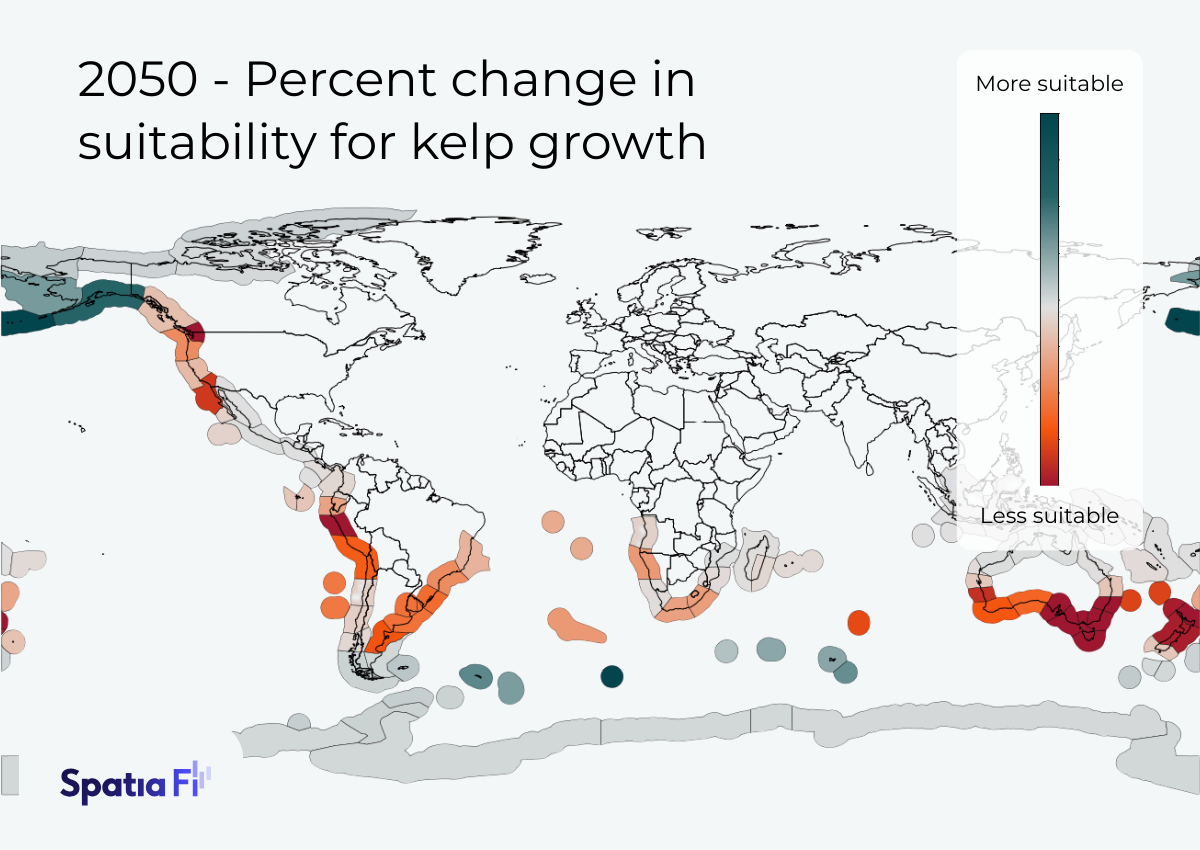
3) SpatiaFi modeling and financial quantification. To link the company's physical footprint and sourcing regions to projected planetary impacts, we built upon our Suitability Projections using Agro-ecological Dynamics and ECOCROP (SPADE) model in SpatiaFi. The chronic shifts in growing region suitability identified by the SPADE model were combined with a bespoke econometric model to quantify the probability of financial impacts for each future climate scenario. The following metrics were used to financially quantify physical risks:
- Physical risk from extreme weather: business interruption costs, asset-level damage projections from cyclones, flooding, and sea level rise.
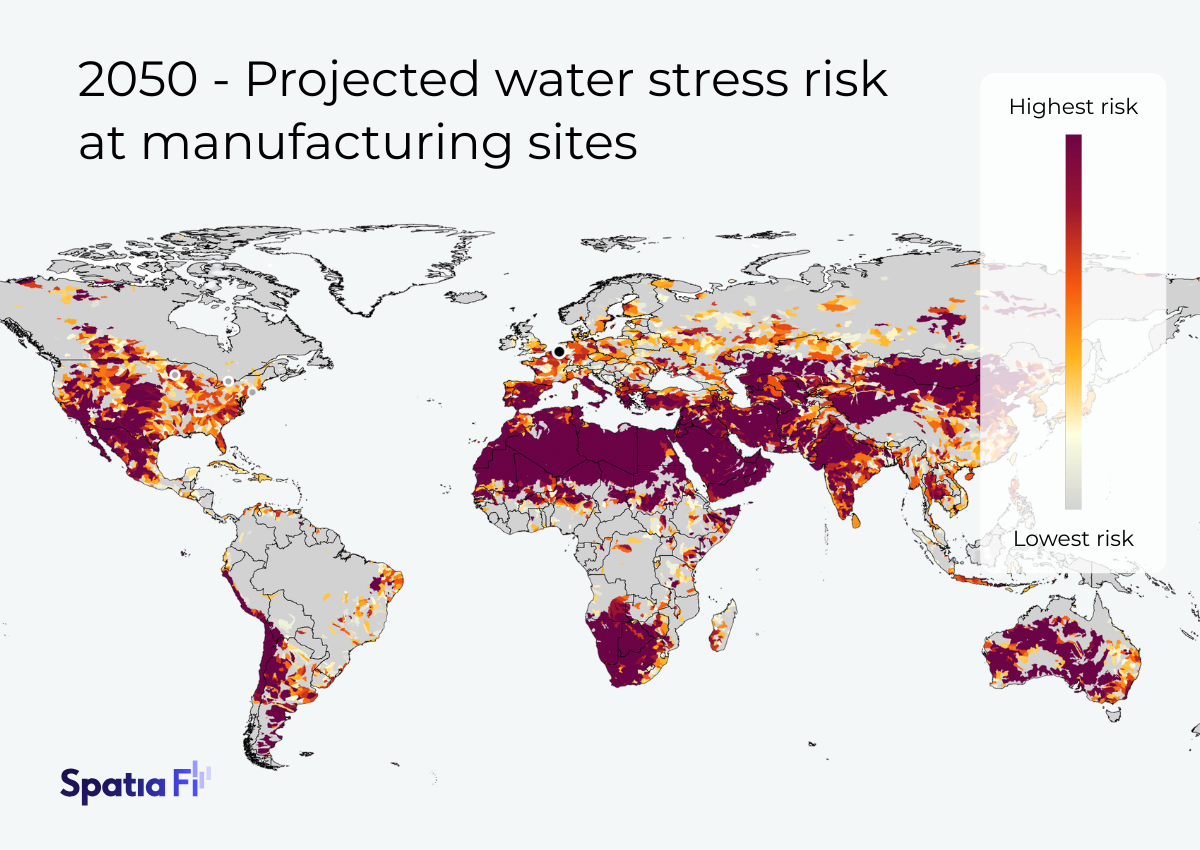
- Water stress: increased utility spend, business interruption costs.
- Commodity scarcity: suitability, yield, and price change for kelp, palm, vanilla, patchouli, ylang-ylang, and vetiver.
For example, under a high emissions scenario, our analysis revealed that prices of some key natural ingredients could increase by up to 20% by 2050, and combined water and climate risks could expose the company to between $180M and $420M in annual business interruption costs.
While SpatiaFi powered the physical risk modeling, Earth Finance also evaluated the financial implications of priority transition risks under multiple time horizons.
4) Prioritizing targeted resilience investments. Findings were delivered to more than 40 executive and cross-departmental stakeholders from sustainability, procurement, facilities, operations, risk management, water, and nature. Importantly, the outputs were not framed as abstract planetary risks, but as material financial impacts.
As part of this presentation, we proposed investments that balanced near-term actions to build resilience with long-term strategic bets to secure future supply. For instance, one short-term lever was performing a business value at risk (BVaR) analysis to prioritize water-related CapEx, while a longer-term lever was implementing regenerative agriculture pilots with high-risk suppliers.
Project outcomes
Our beauty client now has a clear, location-specific understanding of planetary risks and opportunities across its full value chain. And more importantly, they have insights into how those risks and opportunities could financially impact the business, giving the team a powerful case for action.
Key wins and findings
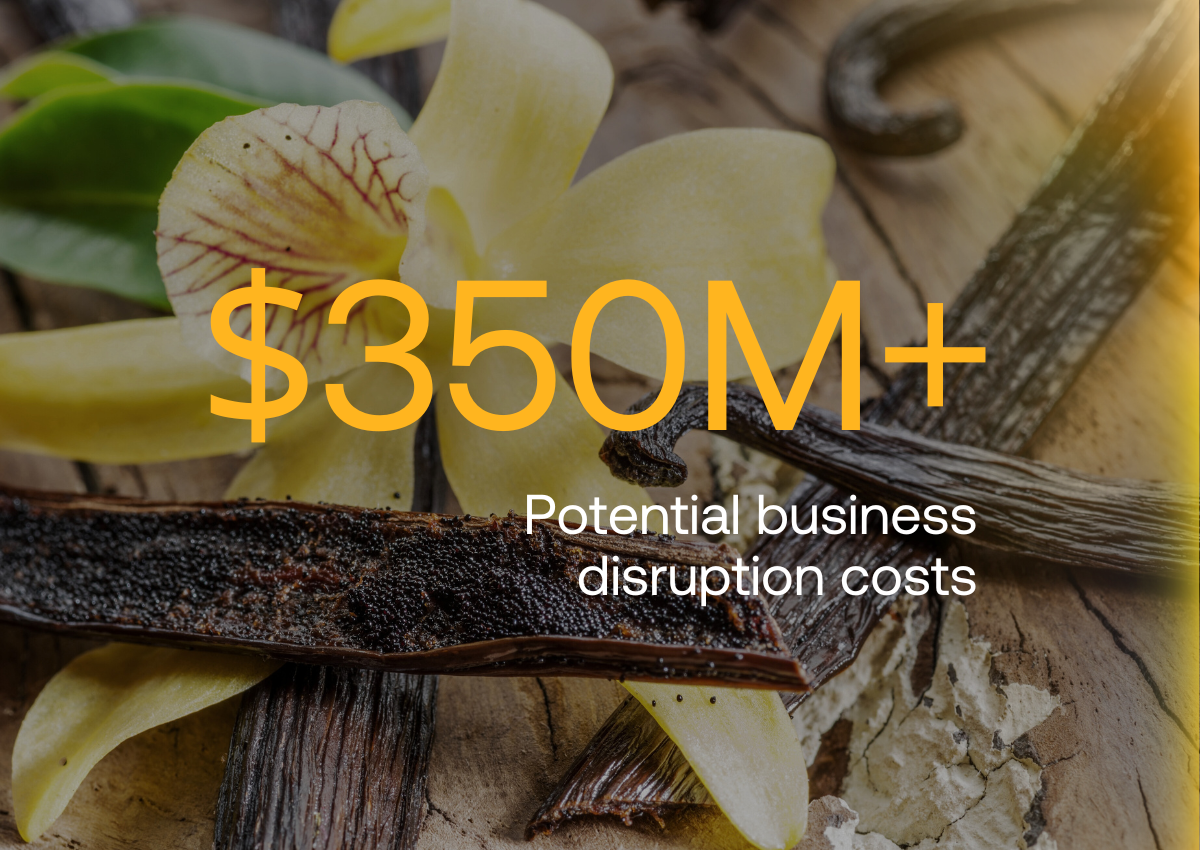
$350M+
Average potential annual business disruption costs by 2050 from planetary risk
6 core commodities
Key natural ingredients analyzed for future growing region suitability
1,700+ sites
Manufacturing sites, stores, and salons assessed for extreme weather risks
$30M - $60M
Potential annual savings from switching to alternative packaging by 2050
Following this project, the team is equipped to:
- Build a business case for targeted resilience investments, especially in water-stressed regions.
- Elevate executive understanding of planetary risk and opportunity as a financial issue.
- Streamline compliance with EU CSRD scenario analysis requirements.
- Implement tangible, data-backed adaptation and resilience interventions.
Notably, engagement expanded beyond sustainability teams. The financial and geospatial insights presented catalyzed momentum in operations, procurement, and the integration of community resilience impacts into overarching business strategy.
Planetary change is complex and location based. To strengthen resilience and growth, companies need to understand where risks and opportunities exist (down to facility, hectare, or watershed) and how they affect financial performance. Spatial finance makes this possible.
Interested in financially quantifying planetary risks and opportunities? Earth Finance combines strategy, deep subject matter expertise, and geospatial intelligence to help companies thrive amid planetary change.