Insights
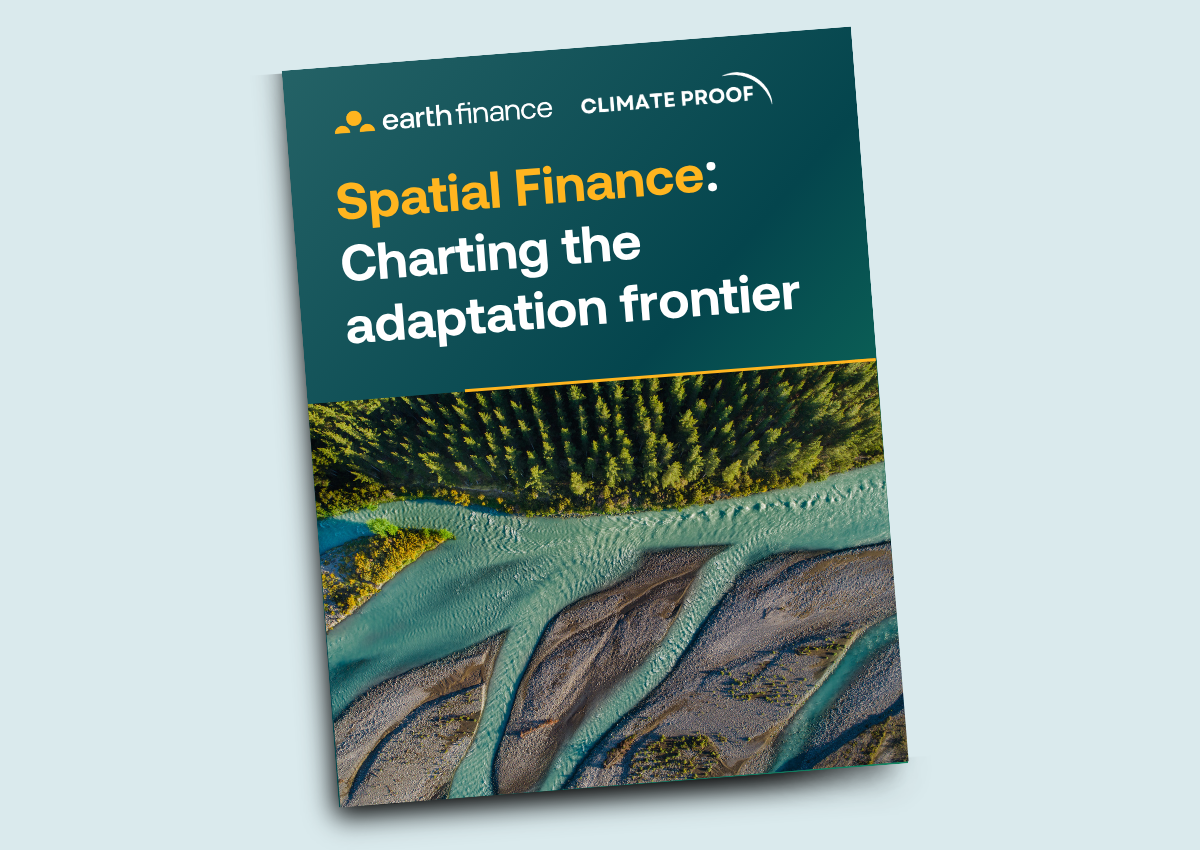
Spatial Finance: Charting the adaptation frontier

We deploy advisory and technology-enabled solutions that unlock the power of sustainable economic growth.
Learn moreWe help corporations, investors and policymakers unleash opportunity amid planetary and economic change.
Learn more
Capital allocation decisions rely on assumptions about the physical world – that water will be available, infrastructure will hold, and the natural resources underpinning operations and supply chains will behave as they have in the past. Those assumptions are breaking down, while transition forces in policy, markets, technology, and geopolitics are compounding the financial impact of planetary change.
This paper explores how Spatial Finance, the integration of geospatial data with financial and policy analysis, gives organizations the asset-level intelligence they need to see where physical and transition risk intersect and to allocate capital with confidence. Access your copy below for a deeper dive on:
Written in collaboration with Climate Proof, a leading publication on adaptation finance, tech, and policy.
 , our Spatial Finance platform: